

How much can I put on my roof?
Last Updated: 20 October 2026
Three numbers decide it, and the smallest one wins.
The first is your vehicle’s roof load limit. The second is the load rating of the roof rack fitted to it. The third is the weight of everything going up there, and that includes the rack itself. Once you have all three, the sum takes a minute.
The vehicle’s roof load limit
Your vehicle maker sets this, and it’s in the owner’s manual or handbook, usually under loading or specifications. It is the most weight the roof is designed to carry while you drive.
This figure covers the rack and the load together. If the manual says 75 kg and your rack weighs 10 kg, you have 65 kg left for gear.
Some vehicles have no roof load figure at all, or say the roof isn’t designed to carry anything. In that case don’t guess. Ask the vehicle maker or a fitter before putting a rack on.
The rack’s load rating
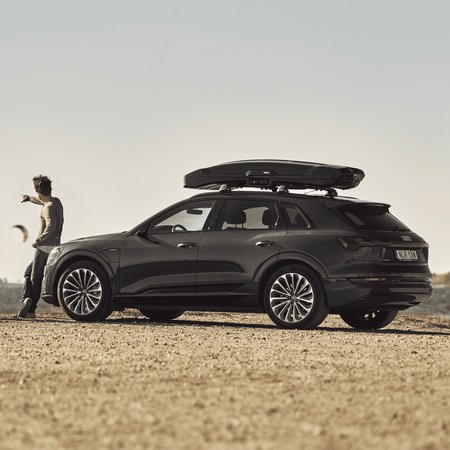
Roof rack makers publish their own rating, and it often depends on the exact fit for your vehicle. The same bars can carry a different load on a car with raised rails than on one with fixed mounting points. Look up the rating for your vehicle and fit kit, not the bar on its own. You’ll find it in the rack maker’s fit guide, the fitting instructions, or the product page.
You can use whichever is lower, the vehicle limit or the rack rating. A heavy-duty platform rated for 100 kg on a car with a 75 kg roof limit still gives you 75 kg, minus the platform’s own weight.
Doing the sum
Here’s an example with made-up but typical numbers. Use your own figures, not these.
- The handbook says the roof load limit is 75 kg.
- The crossbars and feet weigh 6 kg together.
- An empty roof box weighs 18 kg.
- That leaves 75 − 6 − 18 = 51 kg for what goes in the box.
Bathroom scales are fine for weighing gear, and it’s worth weighing the heavy items rather than guessing. Water adds up fast. Every litre is a kilo, so a full 20 litre jerry can is about 20 kg before you count the can.
Moving or parked
The roof load limit in most handbooks is a dynamic figure, meaning the weight the roof can carry while the vehicle is moving. Braking, bumps and cornering all put extra force on the roof, which is why the moving figure is the lower one.
A static rating is the weight the roof can hold while the vehicle is parked and still. Without those driving forces the roof can take more, so a static rating is usually higher than the dynamic one.
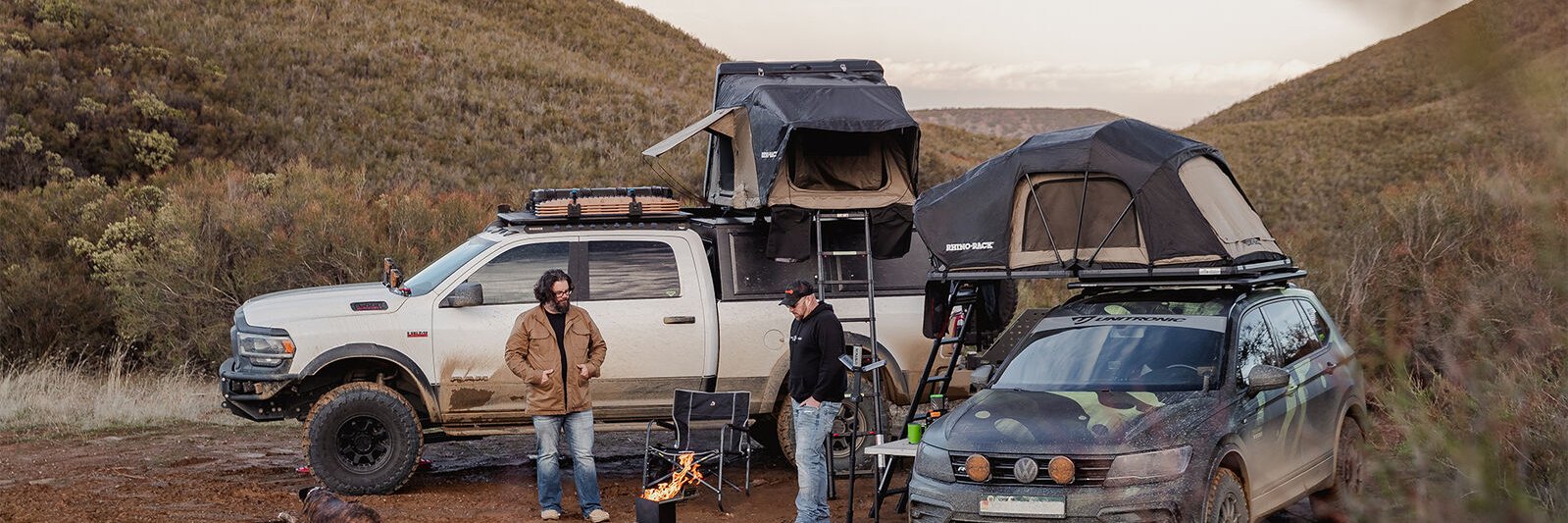
Rooftop tents and static ratings
A rooftop tent has to pass two checks.
For the drive, the tent and the rack it sits on count against the dynamic limit like any other load.
For the night, the roof carries the tent, the rack, the people inside and their bedding. That total needs to sit within the static ratings of the rack and the tent. Rack and tent makers publish these figures, and in practice one of them is usually what limits you. The figure depends on the system. Rhino-Rack’s fitting instructions for its Pioneer 6 platforms, for example, give a total static load limit of up to 300 kg, and some of its other systems list different figures. Check the one for your exact rack and tent.
Most vehicle handbooks don’t give a static rating at all. That’s normal, and on its own it doesn’t rule a tent out. Tent makers do still ask that the vehicle’s roof can support the tent in use, so if you’re unsure about yours, ask the vehicle maker or one of our stores.
You’ll also see rules of thumb online that multiply the dynamic figure by two, three or five to get a static one. We haven’t found a published standard behind any of them, and they disagree with each other, so use a published rating instead.
Here’s an example, again with made-up numbers.
- The handbook gives a dynamic roof limit of 80 kg.
- The platform weighs 20 kg and the tent weighs 55 kg, so the drive puts 75 kg on the roof. That’s under 80 kg.
- At night, two adults at 80 kg each and 10 kg of bedding bring the total to 20 + 55 + 160 + 10 = 245 kg. That’s within a 300 kg static rating for the rack, and it needs to be within the tent’s own rating too.
Rough roads
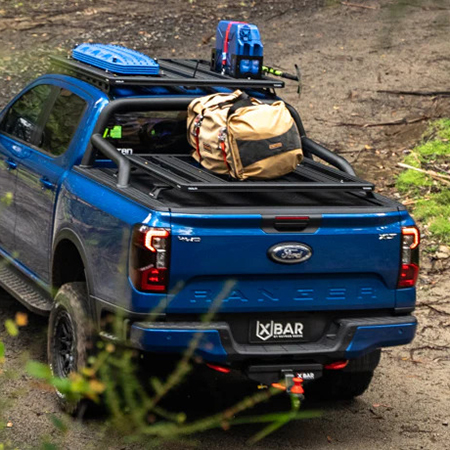
Corrugations and off-road tracks shake a load far harder than a highway does. Many rack makers publish a lower rating for off-road use. Rhino-Rack’s Pioneer 6 instructions, for example, set the off-road allowance at two-thirds of the on-road one. If your fitting instructions give an off-road figure, that’s the number to plan around for a trip that leaves the bitumen. If you’re unsure, carry less on the roof and more inside.
Loading the roof well
Staying under the limit is the start. How you load matters too.
- Put the heaviest items in the middle, between the bars, and keep them low.
- Spread the weight across both bars rather than hanging it off one end.
- Strap everything down, then check the straps again after the first few kilometres. Loads settle.
- Remember the extra height. Underground car parks and some drive-throughs have clearance limits, and a roof box or a kayak can put you over them.
- Expect the vehicle to feel different. Weight up high makes it lean more in corners and feel crosswinds more, so allow more room for braking.
Anything on the roof adds wind noise and fuel use. How much depends on the vehicle, the rack and the load, so we’ll cover that separately rather than guess at a number here.
Where to find your numbers
- Vehicle roof load limit: the owner’s manual or handbook.
- Rack rating: the rack maker’s fit guide or the fitting instructions for your vehicle.
- Item weights: the product page or your bathroom scales.
If you’re still not sure what your vehicle and rack can take, our stores fit roof racks and can often help find the guidance for your vehicle, though not every vehicle has published figures. Our roof box guide covers choosing and fitting a box, and you can browse our crossbars and platforms.