
What roof rack fits my car?
Last Updated: 20 October 2026
The crossbars are the part you see, but the feet underneath decide whether a rack fits. Each roof type needs its own feet, and most need a fit kit made for your exact vehicle. So the first job is working out which roof you have.
The roof types
There are six, and you’ll see the same names on rack product pages.
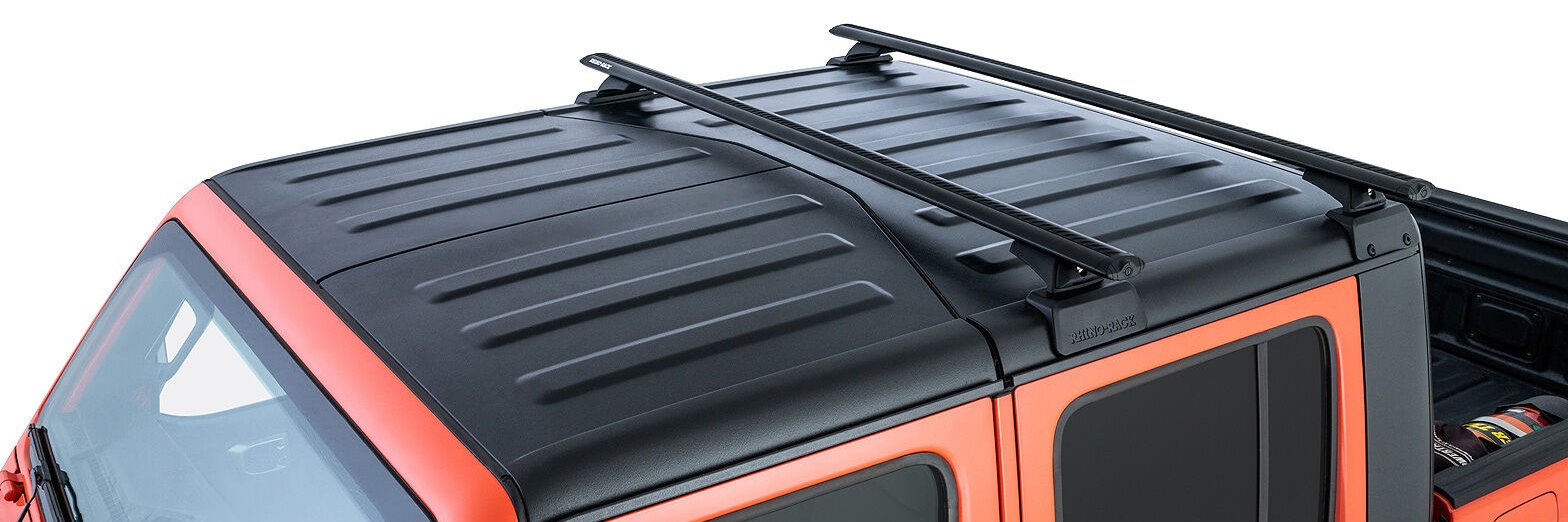
Bare roof. No rails, no visible mounting points, just a smooth roof. The feet clamp to the roof edge above the doors, using a fit kit shaped for your vehicle.
Fixed points. The vehicle maker has built mounting points into the roof, usually hidden under plastic covers or trim strips, and the rack bolts onto them. On some vehicles a fitter can add mounting points by drilling and riveting them into the roof, which blurs the line between a bare roof and a fixed-point one.
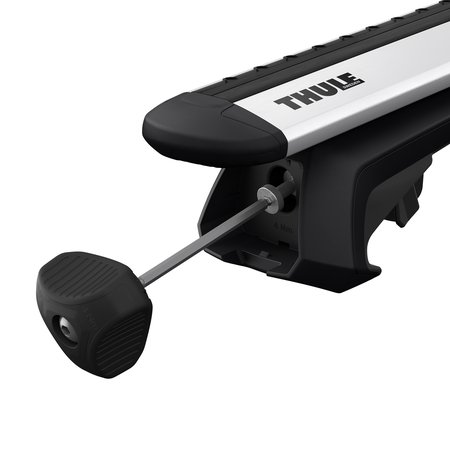
Raised rails. Rails run along the roof with a gap underneath, so you can get your fingers around them. The feet clamp around the rail.
Flush rails. These sit flat on the roof with no gap underneath, and they need their own feet. Feet made for raised rails won’t fit them.
Rain gutters. A channel runs along the edge of the roof, mostly on older vehicles and some vans. The feet sit in the gutter and clamp under its lip.
Tracks. Channels are fixed along the roof and the rack’s feet slide into them. Fitting tracks is a job for an installer.
Working out which one you have
Look along the top edge of the roof on both sides.
- If there are rails, check underneath them. A gap means raised rails. No gap means flush rails.
- If there are no rails, look for small covers or flaps along the roof, or a trim strip that lifts out. Those usually hide fixed points.
- A channel running along the edge of the roof is a gutter.
- A smooth roof with none of these is a bare roof.
If you’re still not sure, the owner’s manual may tell you, and the fit guides below work from your vehicle details anyway.
Some factory rails are for looks
Not every set of rails is built to carry weight. The owner’s manual for one Kia model says the roof rack "is not intended for load carriage and it is for aesthetics only", while other Kia models rate their rails for a load. It can vary even within one brand, so check your manual before you put anything on the rails.
How it mounts affects the rating
What a rack can carry depends on the vehicle, the roof type and how the rack is attached, as well as the bars themselves. The same bars can be rated differently from one vehicle to the next.
Whatever the rack’s rating, the vehicle’s own roof limit still applies, and the lower of the two is your limit. Adding a third bar doesn’t raise it. Our guide on how much you can put on your roof walks through the sum.
Sunroofs and glass roofs
A rack and a sunroof can often share a roof, but not always. On some vehicles the rack sits in the way of an opening sunroof, and the fit kits for those vehicles carry a note not to operate it with the rack fitted. If your vehicle has an opening sunroof or glass roof, check the notes for your fit kit before you buy.
Finding the right fit kit
Each of the big rack makers has a fit guide on its website. Enter your vehicle and it lists the feet, fit kit and bars that suit it.
- Thule’s fit guide asks for make, model and year.
- Rhino-Rack’s Fit My Vehicle asks for make, model, year and body type.
- Yakima’s fit guide asks for year, make and model.
Body type matters because a wagon and a sedan of the same model can take different kits. Once you have a kit, its fitting instructions give the bar spacing, so there’s no guesswork there.
You can browse complete roof rack kits, crossbars and fitting kits on our site, or ask one of our stores to help match a rack to your vehicle.
Fitting it yourself
Plenty of racks are designed to be fitted at home with basic tools, and some feet come with a torque key that shows when they’re tight enough. Racks that bolt to fixed points or clamp to rails are usually straightforward. Tracks, gutter mounts and heavy-duty backbone systems are better left to a fitter.
If you’re doing it yourself, a few things matter.
- Follow the fitting instructions exactly. Rack warranties depend on correct fitting.
- Tighten bolts to the torque the instructions give, not as tight as you can.
- Check the bolts again after a short drive, then regularly. Weekly is a good habit if the rack stays on.
- Each time the rack goes on, give it a firm push and pull to check it’s solid.
- Take the rack off before an automatic car wash.
If you’d rather not, our stores fit roof racks, and the roof rack installation page has the details.