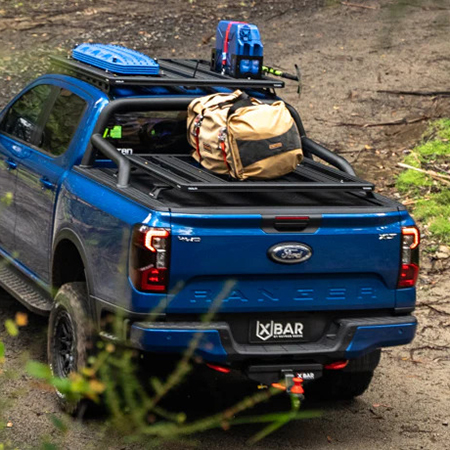


EV Towbar Fitment
Towbars for Electric Cars
EV Towbar Fitment in Newcastle, the Hunter & Sydney
Fitting a towbar to an electric car isn't the same job as fitting one to a diesel ute. There's high-voltage cabling near the mounting points, software that has to recognise the trailer, and regenerative braking that changes how the trailer's brakes behave. We fit towbars to EVs at all four of our NSW workshops, and this page covers what's different and what's worth checking before you book. For towbars on any other vehicle, see our main towbar installation page.
New to towing with an EV? Read this first, then book the fitting.
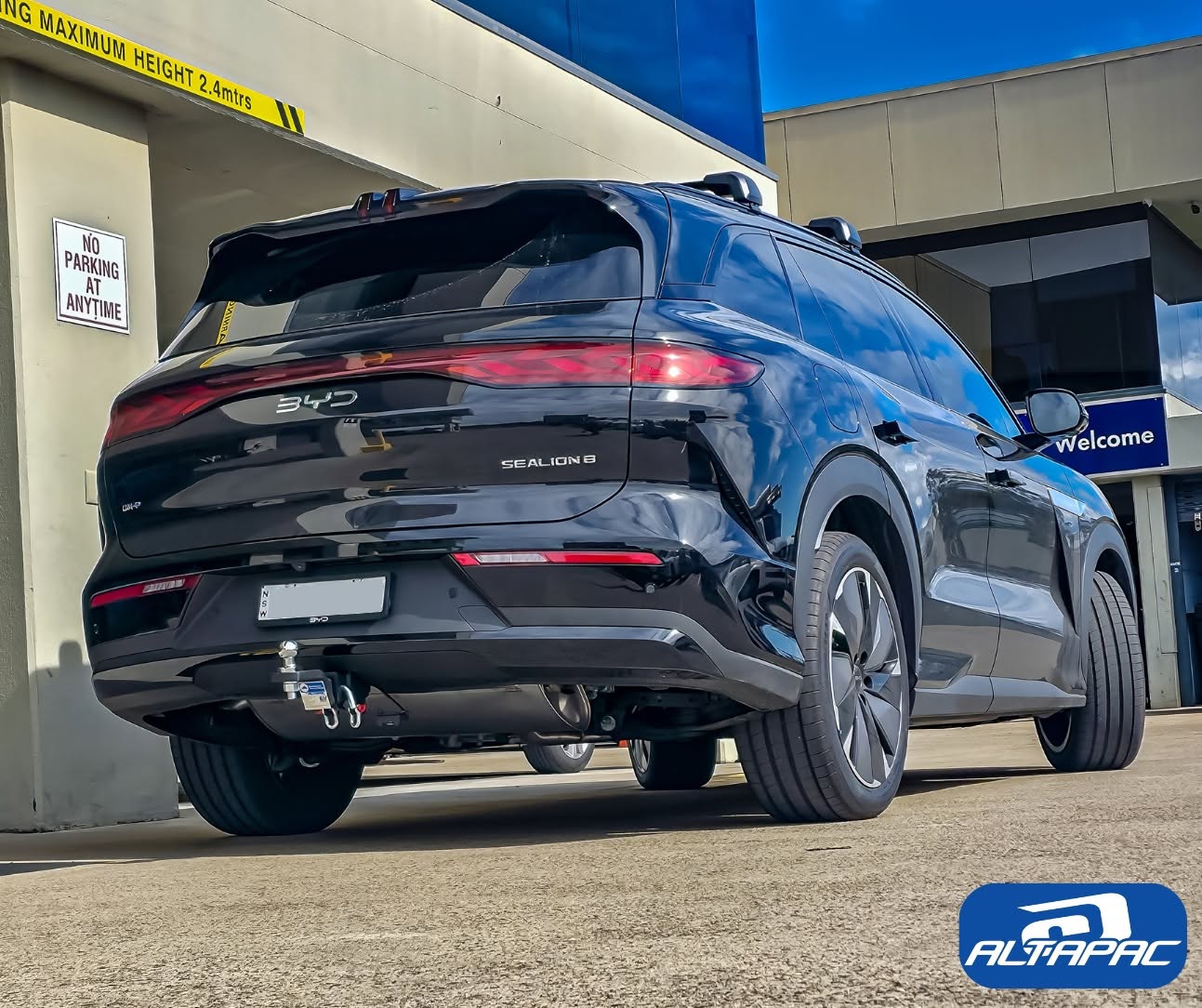
Towing With an EV
Plenty of electric cars tow well. They have strong low-speed torque and they're very stable with a heavy battery under the floor. But some things about an EV change how the towbar should be fitted, and how you plan a trip once it's on. Here's what's different.
2,500 kgHighest braked rating among popular EVs
~10%Of the loaded trailer's weight sits on the towball
30–55%Less range when towing, depending on the trailer
4NSW workshops fitting EV towbars
On this page
Check your rating Wiring and trailer mode The high-voltage system Regen and trailer brakes Range and charging Bike racks on EVs QuestionsCheck your EV's rating first
Your vehicle's manufacturer sets its towing capacity, and a stronger towbar can't raise it. Whichever is lower, the car's rating or the towbar's, is your limit. EV ratings also vary more by variant than most people expect. The same model can be rated very differently depending on whether it's front, rear or all-wheel drive.
| Vehicle | Braked towing | Note |
|---|---|---|
| Kia EV9 (AWD) | 2,500 kg | Large SUV |
| Hyundai IONIQ 9 | 2,500 kg | Large SUV |
| BMW iX xDrive50 | 2,500 kg | |
| Tesla Model Y | 1,600 kg | All variants |
| Kia EV6 (AWD) | 1,600 kg | All-wheel drive |
| Hyundai IONIQ 5 (AWD) | 1,600 kg | All-wheel drive |
| Volvo EX30 | 1,600 kg | |
| Polestar 2 | 1,500 kg | |
| BYD Sealion 7 Performance (AWD) | 1,500 kg | All-wheel drive |
| BYD Sealion 7 Premium (RWD) | 750 kg | Same model, half the rating |
| BYD Atto 3 | 750 kg | Braked and unbraked the same |
Braked towing capacities for Australian-delivered vehicles as published at the time of writing. Ratings change with variant, drivetrain and build date, and manufacturers do revise them. Your compliance plate and owner's manual are the final word, and we check your exact vehicle before quoting. Some popular EVs have no Australian tow rating at all.
The number that usually limits you is towball download. That's the weight pressing straight down on the ball, typically around 10% of the trailer's loaded weight, and your vehicle has a separate limit for it. EVs are also heavy to begin with, so the battery has already used up a lot of the room under the gross vehicle mass (GVM). Passengers, luggage and towball download all count against what's left, and on a loaded family trip that runs out sooner than you'd think. We work through all three numbers with you before recommending a towbar.
Where each limit applies
Each one has its own limit, and you need to be under all three at once. On an EV, GVM and towball download are usually the ones that run out first.
Wiring, software and trailer mode
Most modern cars, and nearly all EVs, need a vehicle-specific wiring module rather than wires spliced into the tail lights. The module plugs into the factory connectors and talks to the car's own network, so the car knows when a trailer is connected.
That matters because many EVs change how they behave when a trailer is detected. Depending on the vehicle, trailer mode can adjust stability control, mute the rear parking sensors, and change how driver-assist systems work. Tesla's trailer mode, for example, limits automatic emergency braking, increases the following distance on adaptive cruise and switches off lane-keeping assist.
Check this before you buy a towbar. On some EVs, trailer mode is switched on through software, and some manufacturers will only enable it with their own genuine towbar, or after the dealer has coded the car. We check which applies to your vehicle before quoting, so you don't end up with a towbar the car won't recognise.
Working around the high-voltage system
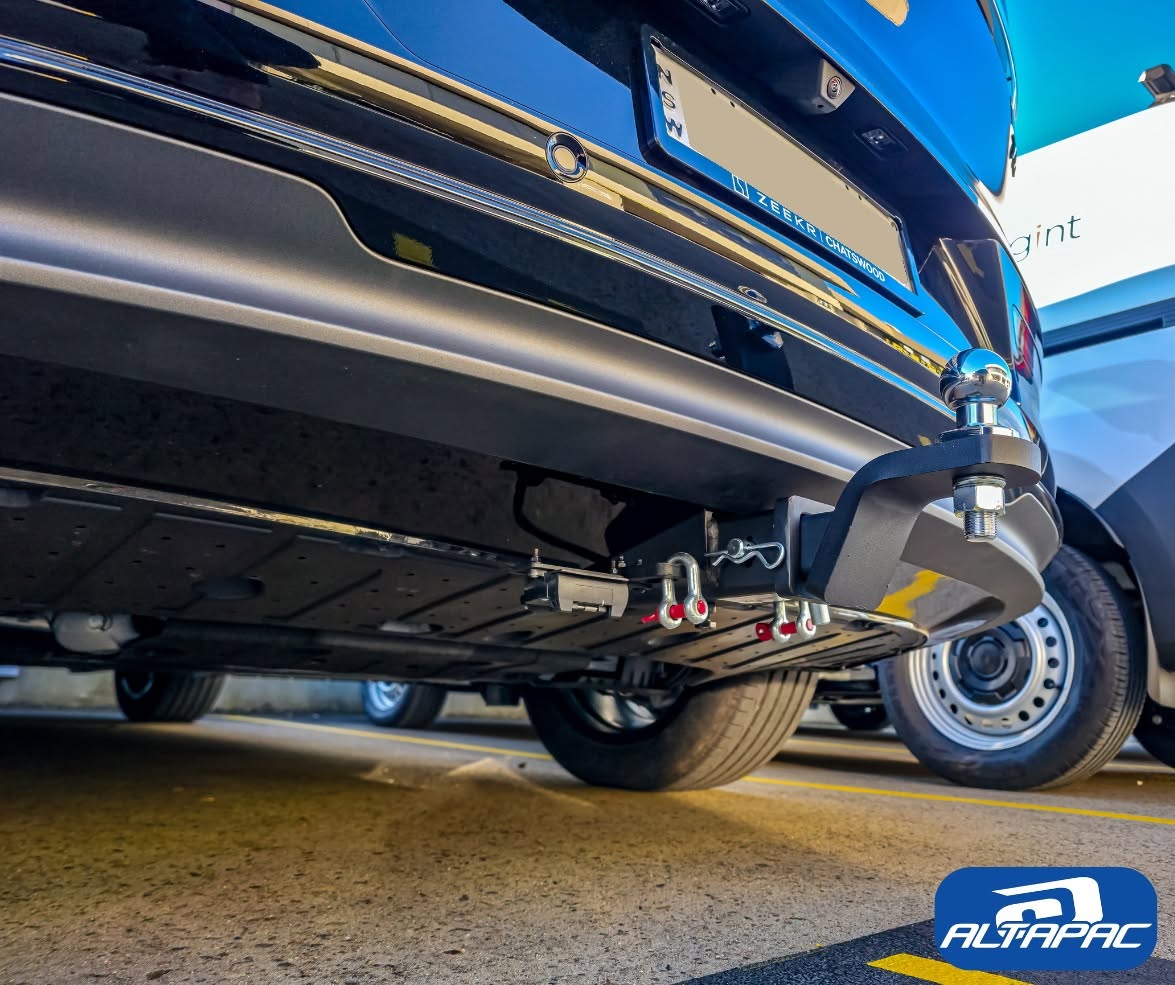
EVs route high-voltage cabling and battery coolant lines through the chassis, and on rear-drive and all-wheel-drive models there's often an electric motor sitting near the rear crossmember. Fitted to the manufacturer's mounting points with the correct vehicle-specific kit, none of this gets in the way.
It's where a rushed or DIY install can go badly wrong, though. Drilling blind into the back of an EV isn't something to take a chance on. We fit to the designated mounting points, follow the towbar maker's instructions for your exact model, and we don't drill anywhere we haven't confirmed is clear.
Orange cabling means high voltage. It doesn't get touched, cut or drilled near. If a fitting kit would need it, that's a kit we won't use.
Regenerative braking and the trailer's brakes
On a petrol or diesel car, the trailer's electric brakes come on when you press the brake pedal. An EV does a lot of its slowing without the pedal, through regenerative braking. Depending on the vehicle and how it signals regen deceleration, the trailer's brakes may not come on during gentle regen slowing. The car then ends up stopping the whole combination on its own, and the trailer pushes from behind.
Petrol or diesel
Driver presses the brake pedal
Brake signal goes to the trailer
Car and trailer brake together
EV slowing on regen
Driver lifts off the accelerator
Car slows through regenerative braking
Trailer's brakes may not come on
Trailer pushes against the car
There are a few ways to manage it:
- Get the brake controller set up on your car. We fit and adjust it with your EV and trailer, not to a generic setting.
- Use trailer mode. Some EVs soften regenerative braking automatically when it's on.
- Turn regen down when towing, if your car lets you, so more of the stopping goes through the brake pedal and the trailer's brakes.
- Keep using regen on long descents. It takes heat off the brakes on the way down a long hill.
The trailer braking rules are the same as for any vehicle. Above 750 kg loaded, the trailer needs brakes. Above 2,000 kg, it needs brakes on every wheel and a breakaway system. Our towbar installation page covers those in more detail.
Range and charging with a trailer
Towing takes a big bite out of an EV's range, and the main factor is how much air the trailer has to push through. Here's what that looks like on a car with 400 km of range:
What 400 km of range becomes when towing
0100200300400 km
Lower figure Typical spread above it. Long climbs cut another 20–30% on top. In an RAC WA test, a Tesla Model X towing a 1,300 kg caravan went from about 410 km of range to about 230 km.
Charging needs a bit more planning too. Many fast chargers have nose-in bays, so you may need to unhitch, which adds 10–15 minutes a stop. Look for pull-through bays (PlugShare comments are a good place to check), plan to stop more often, and arrive with a 10–15% buffer rather than running it close. If you unhitch, park the trailer in a marked bay rather than leaving it in the driveway of the charging site.
Nose-in bay: built for the car, not the trailer. Unhitch first and park the trailer in a marked bay.
Pull-through bay: long enough for the car and trailer. Drive in, charge, and drive out still hitched.
Choose a detachable tongue if you don't tow every week. Taking it off when you're not towing tidies up the back of the car and saves a little drag.
Bike racks on EVs
If your EV has no tow rating, or a low one, you may still be able to fit a towbar purely to carry a bike rack. That's only possible if the vehicle manufacturer and the towbar maker approve it for accessory use. The limit that matters is the load pressing down on the ball.
This is where e-bikes catch people out. A platform carrier loaded with two e-bikes can easily come to 70 kg or more, which is over the limit on some cars. We check your vehicle's limit against the carrier and bikes before recommending anything. Our bike rack supply and install page has more on choosing a carrier.
What's included when we fit an EV towbar
The towbar itself is the easy part. What makes an EV install right is checking everything around it.
1Check the numbersTowing capacity, towball download and GVM for your exact variant, before we quote.
2Fit the towbarA vehicle-specific bar and wiring module on the manufacturer's mounting points.
3Sort trailer modeChecked on your car, with a heads-up beforehand if it needs dealer coding.
4Set up the brakesA brake controller fitted and set up for your car, where your trailer needs one.
5Test and hand overLights and brakes tested, and a run-through of trailer mode before you leave.
Not driving an EV?
Light, medium, heavy duty and recovery towbars for every other vehicle.
Why Choose Altapac?
We've been fitting gear to Australian vehicles since 1972. Four workshops, one standard of work, and a guarantee that the parts on your car are the right ones for it.
1972Fitting Australian vehicles since
4NSW workshops across the Hunter and Sydney
30,000+Fitments completed
4.6 ★Average from 1,113 Google reviews
Guaranteed FitWe match parts to your exact make, model and build. If what we supply doesn't fit your vehicle, we make it right.
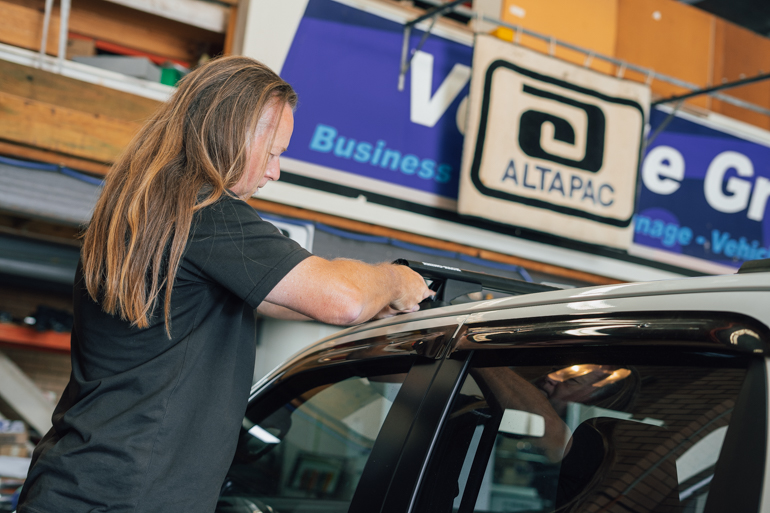
Authorised fitters, not general mechanicsWe're authorised to fit the brands we sell, which means factory fitting instructions, correct torque settings, and warranties that stay intact.
Advice from people who towOur teams tow vans, boats and trailers themselves, and we'll tell you honestly whether your EV suits what you want to tow.
Pay how it suits youZip and Afterpay available in store and online, so a full towing setup doesn't have to land in one hit.
What our customers say
Wonderful people to deal with, very good throughout the process and delivered a quality hard lid for my vehicle. Were excellent with any after sales questions, making me feel like they wanted to look after their customers.
Darren M. — Maitland
What a team! This is my 3rd set of roof racks I've had installed by these legends and this one was by far the most complex on my new work van. I have a pretty high attention to detail and Andrew in the office and Beau installing them absolutely nailed it. Very happy and I would have no hesitation in recommending them. Thanks again
James C. — Kotara
Great store to get fitted out for roof racks and attachments for the car. They fitted my first set of roof racks and have helped me out with all the changes to my setup for over 10 years. Great and knowledgeable service too.
Christopher Y. — Artarmon
Where We Fit EV Towbars
All four workshops fit towbars to electric vehicles. Call ahead with your make, model and year so we can check the kit and any software requirements before you come in.
Found your EV towbar cheaper? Bring us the price.
Show us a current offer or written quote from an authorised Australian dealer and we'll match it, freight and charges included. In store, over the phone, by email, or through the website. You get the same price on the towbar, fitted by a workshop you can drive back to.
- Authorised dealers matched, including approved online sellers
- Freight and other charges counted in the comparison
- Apply in store, by phone, by email or online
Applies to products. Grey imports, auction sites and marketplaces are excluded, as are our workshop fitment, window tinting and paint protection services. Full policy
EV Towbar Questions
Most larger EVs can, and some are rated to tow up to 2,500 kg. But it varies by model and by variant, and some popular EVs have no Australian tow rating at all. Your owner's manual and compliance plate give the official figure. If you send us the make, model, variant and year, we'll confirm what yours is rated for and whether it suits what you want to tow.
Under Australian Consumer Law, fitting an accessory doesn't void your warranty on its own. A manufacturer can only refuse a claim where the accessory or the way it was fitted caused the fault. That said, some EV makers are strict about towing, and some only support trailer mode with a genuine towbar. That's why we use vehicle-specific kits fitted to the manufacturer's mounting points, and why we check your manufacturer's stance before quoting rather than after.
If your trailer has electric brakes, yes, the same as on any car. Most trailers over 2,000 kg have them. With an EV, the controller's setup matters more than usual because of regenerative braking. The car can slow down without the brake pedal, and depending on the vehicle, the trailer's brakes may not come on during gentle regen slowing. We fit the controller and set it up with your car, not to a generic setting.
A lot. Plan on roughly half. A full-height caravan at highway speed typically cuts range by around 45–55%, a smaller or more aerodynamic trailer by around 30–40%, and long climbs add more on top. Slowing down helps a lot, because most of the energy goes into pushing air out of the way.
At some sites. Many fast chargers have nose-in bays that a car and trailer won't fit into, so you'll often need to unhitch. Allow 10–15 minutes extra a stop. A growing number of sites have pull-through bays, and checking PlugShare comments before a trip is the easiest way to find them. Overnight, a 15 amp outlet at a caravan park will put back a useful amount of range.
Sometimes. It depends on whether the vehicle manufacturer and the towbar maker approve a towbar for accessory use on your model, and on the load limit they set for the ball. E-bikes are heavy, and a platform carrier with two of them can come to 70 kg or more. We check the limit against your carrier and bikes before recommending anything.